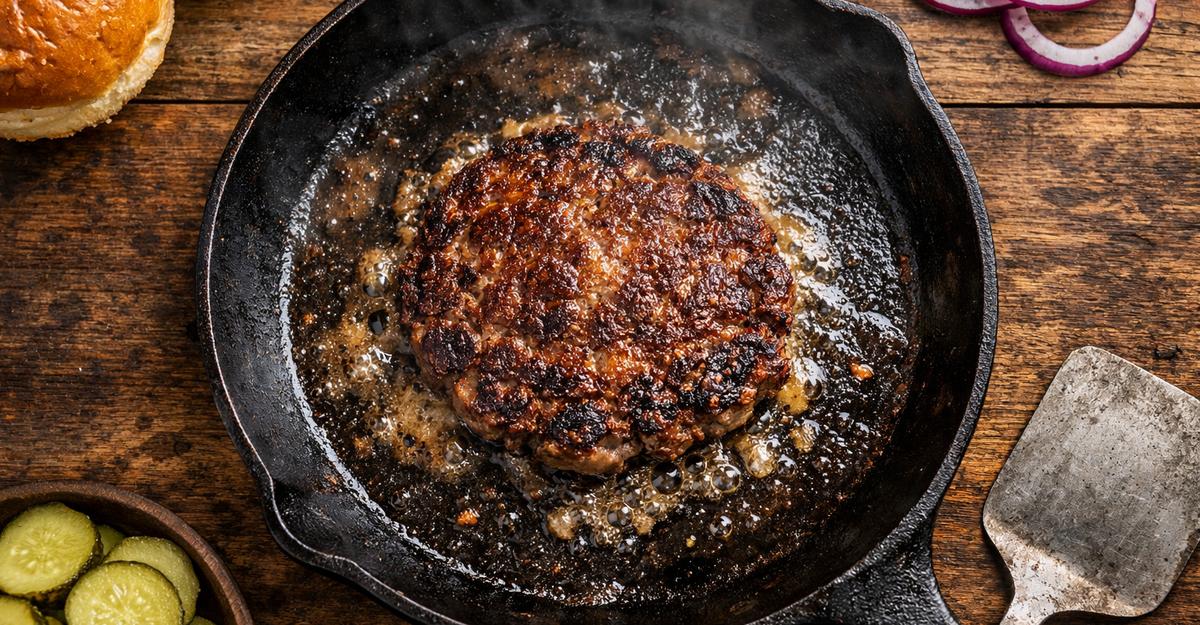
Why Cast Iron Is Perfect for Smash Burgers

Cast ine skillets are prized because they hold and distribute heat evenly. Unlike lightweight pans that cool down when you add a burger patty, a heavy cast iron pan stays screaming hot. That consistent heat produces a Maillard reaction—a chemical reaction between proteins and sugars that creates a brown, savory crust. When you smash a burger in a cast‟iron skillet, the hot metal sears the meat, locks in juices and produces crisp, caramelized edges.
Choosing the Right Cast Iron Skillet
A well„seasoned 10‑ to 12‑inch cast‟iron skillet is ideal for smash burgers. Look for a pan with thick walls and a smooth cooking surface. Pre„seasoned skillets come ready to use, but you can also season a bare pan yourself by coating it with oil and heating it until the oil polymerizes. A smooth, well„seasoned surface prevents sticking and makes cleanup easy.
Step‑by‑Step Smash Burger Guide
Gather Your Ingredients
For four burgers you’ll need ground beef (80 % lean, 20 % fat), salt, pepper, cheese slices, burger buns and condiments. High‑fat ground beef makes juicier patties.

Preheat Your Skillet
Set your cast‟iron skillet over medium‑high heat and let it preheat for a few minutes. A properly heated pan is essential for a good sear. While it heats, divide the meat into four loose balls.
Shape and Smash the Patties
Place one meat ball onto the hot skillet and press it flat with a sturdy spatula.
firm pressure for about 10 seconds to maximize the contact area. Season the exposed side with salt

and pepper.
Cook and Flip
Let the patty cook for 2–3 minutes until the bottom develops a dark crust. Flip the burger and immediately add a slice of cheese. Cook for another minute until the cheese melts and the burger is done. Repeat with the remaining patties, working in batches so the skillet stays hot.
Toast the Buns and Assemble
Add a small pat of butter to the skillet and toast the cut sides of the buns until golden brown. Place a cheese‑topped burger on each bottom bun, add your favorite sauces and toppings, and close with the top bun.
Meat Matters: Fat Content and Freshness
A higher fat content—around an 80/20 lean‑to‑fat ratio—produces the juiciest burgers. Lower‑fat meat can result in dry, crumbly patties. For the best flavor, choose fresh ground beef from a trusted butcher or grind your own. You can even experiment with blends that mix beef with pork or lamb for a unique flavor profile.
Tips for Perfecting the Smash
- Use a heavy spatula or burger press. A sturdy spatula makes it easy to press and flip your burgers.
- Avoid overworking the meat. Loosely packed meat forms a tender patty; over‑handling can make it dense and tough.
- Don’t overcrowd the skillet. Cooking more than two patties at once can cool the pan and prevent a good sear.
- Listen for sizzle. The sizzling sound is a cue that the Maillard reaction is happening and the pan is at the right temperature.
Customize Your Smash Burger
Cheese Options
American cheese is classic, but cheddar, Swiss or pepper jack are delicious alternatives. Strongly flavored cheeses add depth; mild cheeses melt easily and accent the beef.
Toppings and Extras
Classic toppings like lettuce, tomato and pickles add crunch and acidity. For a gourmet twist, try caramelized onions, roasted mushrooms or crispy bacon. Other fun options include fried eggs or avocado.
Buns
Brioche buns add a rich, buttery flavor, while pretzel buns provide a chewy texture. Whatever you
choose, make sure the bun size matches the patty so each bite is balanced. Always toast the buns for extra crunch and flavor.


Enjoy the Smash Burger Experience
Cooking smash burgers on a cast‟iron skillet is more than a technique—it’s an experience. With the right skillet, fresh ingredients and a bit of practice, you can master the art of the sear and serve restaurant‑quality smash burgers at home. Gather friends or family and enjoy experimenting with different cheeses, toppings and bun varieties. Every burger you make is an opportunity to refine your skills and discover new flavor combinations.
Estimated reading time: 5 minutes